Make a Plan

|
Assess where you are in taking care of youWhat are your strengths? What areas could use more attention and nurturing? Take the SelfCare SelfCheck and in find out where you are in taking care of you. Printable SelfCare SelfCheck pdf
Indicate your level of care and attention to each of these selfcare activities and practices: 1- I do this rarely, if ever. 2- I do this occasionally but not often. 3- I do this most of the time. 4- It's routine, I make this a habit. 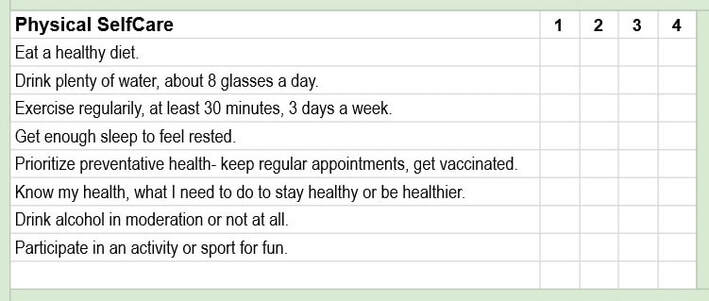
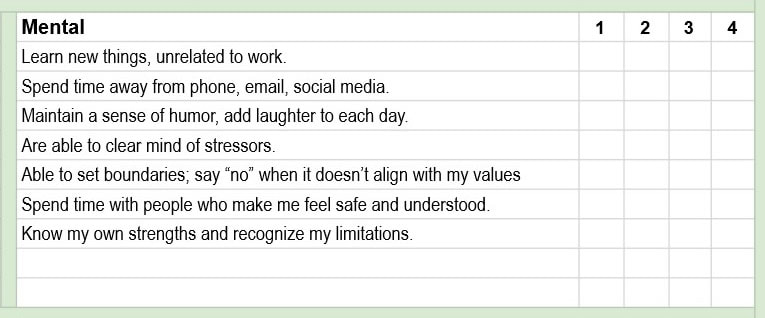
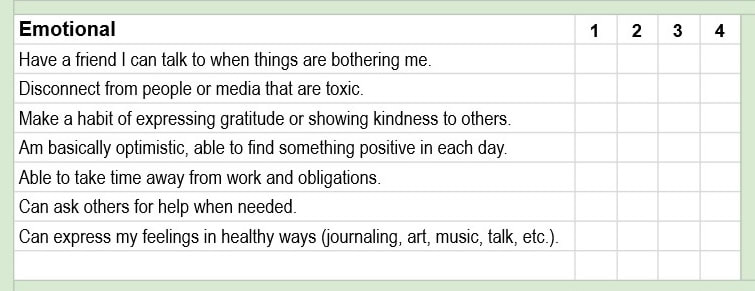
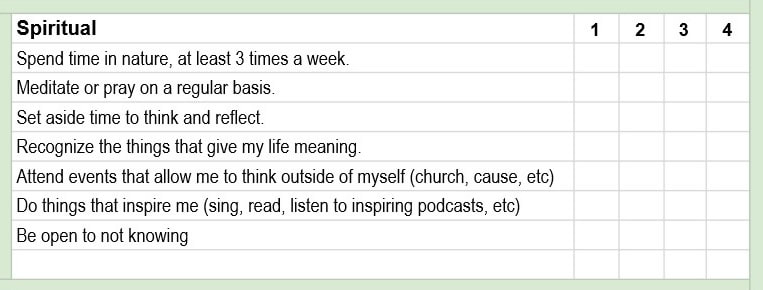
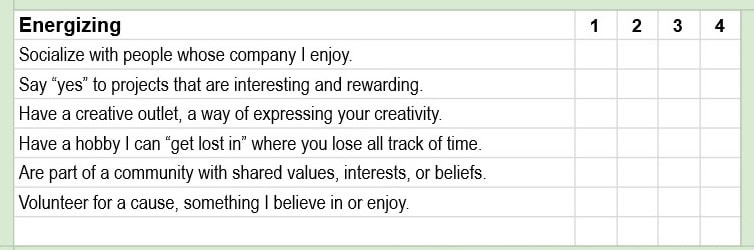
What's next? Look at areas that are solid-- example, physically you eat right and take care of your health.Great, you are on the right track, maintain what you're doing. Then look at the areas where you give the least amount of attention or time in taking care of you.
|

|
Choose activities and behaviorsNow that you know what areas need attention, it's time to add
It's important to choose activities and practices that fit you... this is like buying shoes, they have to fit you or you won't wear them. Start with something you know you can manage, then build on your successes to add more nurturing activities. The chart and lists below will give you ideas. Download a printable SelfCare Activities chart. |
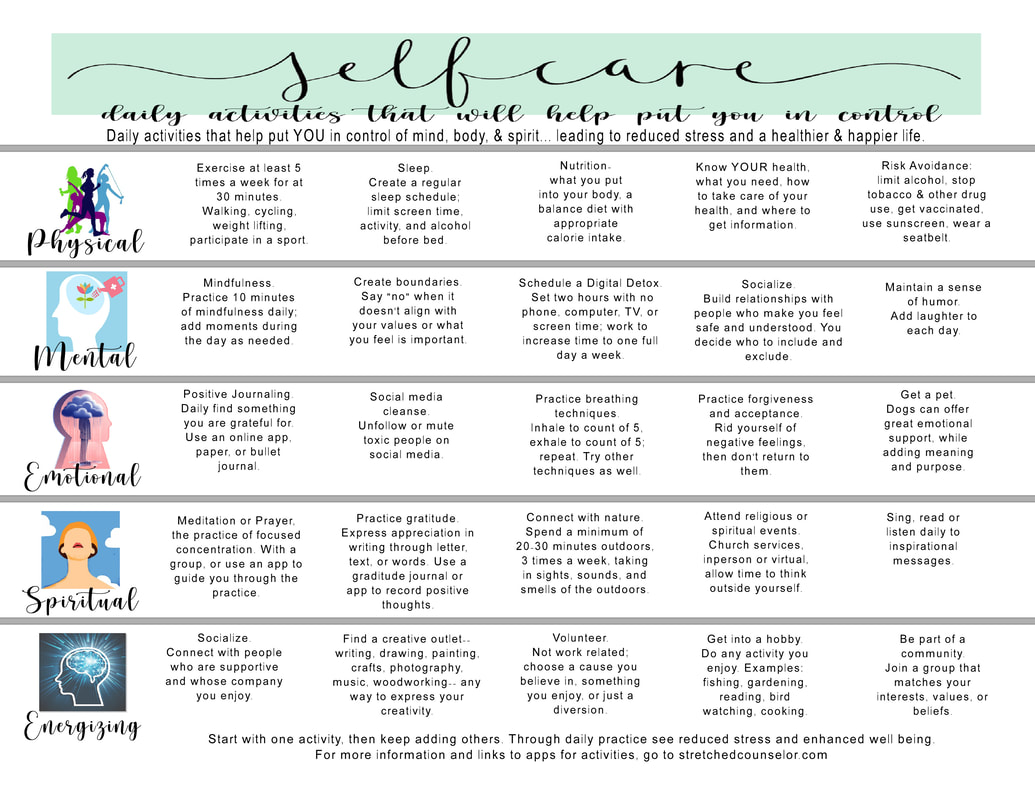
This is just a sample of the many activities and practices that can help relieve stress, and lead to a healthier, happier life.
Find your own, or borrow from others.
Find your own, or borrow from others.
Follow what other high stress professions do...
As a profession, doctors recognize the need for self care in addressing the high stress level of their jobs. Self care includes "any intentional actions you take to care for your physical, mental and emotional health." Regardless of our profession, we need to take care of ourselves.
See what you can borrow from this post to the medical faculty.
From the University of British Columbia Faculty Medicine:
Components of a self-care practice
There are many components to a self-care practice. Listed below are effective strategies to maintain self-care. Try choosing one from each area that you will deliberately work into your day.
See what you can borrow from this post to the medical faculty.
From the University of British Columbia Faculty Medicine:
Components of a self-care practice
There are many components to a self-care practice. Listed below are effective strategies to maintain self-care. Try choosing one from each area that you will deliberately work into your day.
|
Physical self-care:
Eat regularly (breakfast, lunch, and dinner) Get regular medical care for prevention Get massages Dance, swim, walk, run, play sports, sing, or do some other physical activity that is fun for you Take vacations Wear clothes you like Get enough sleep Psychological self-care:
Make time for self-reflection Write in a journal Read literature that is unrelated to work Engage your intelligence in a new area, e.g.: go to an art museum, history exhibit, sports event, theatre Practice receiving from others Notice your inner experiences – listen to your thoughts, judgments, beliefs, attitudes and feelings Say “no” to extra responsibilities sometimes Workplace self-care:
Take a break during the workday (e.g. to eat) Take time to chat with colleagues Make quiet time to complete tasks Have a peer support group Set limits with colleagues Identify projects or tasks that are exciting and rewarding Regularly consult with a mentor |
Emotional self-care:
Spend time with others whose company you enjoy Stay in contact with important people in your life Give yourself affirmations, praise yourself Allow yourself to cry Play with children Identify comforting activities, objects, people, relationships, places and seek them out Spiritual self-care:
Spend time in nature Find a spiritual connection or community Cherish your optimism and hope Be aware of non material aspects of life Be open to not knowing Meditate Pray Sing Take in inspirational content (literature, talks, etc.) |

|
Put your plan into actionNo plan has value just by itself, it needs to be put into action. Start today by doing one thing that will nurture your physical, mental, emotional, or spiritual self. Adding an energizing practice or activity will boost your spirit, mind and body.
Don't stress if you have to restart multiple times! There should be no guilt or judgement, the key is to continue with the practice until it becomes a habit, something that you do each day to take care of you. |