SCHOOL COUNSELOR information has been moved. Click here for link.

What is selfcareSelfcare? What you deliberately do to take care of you.
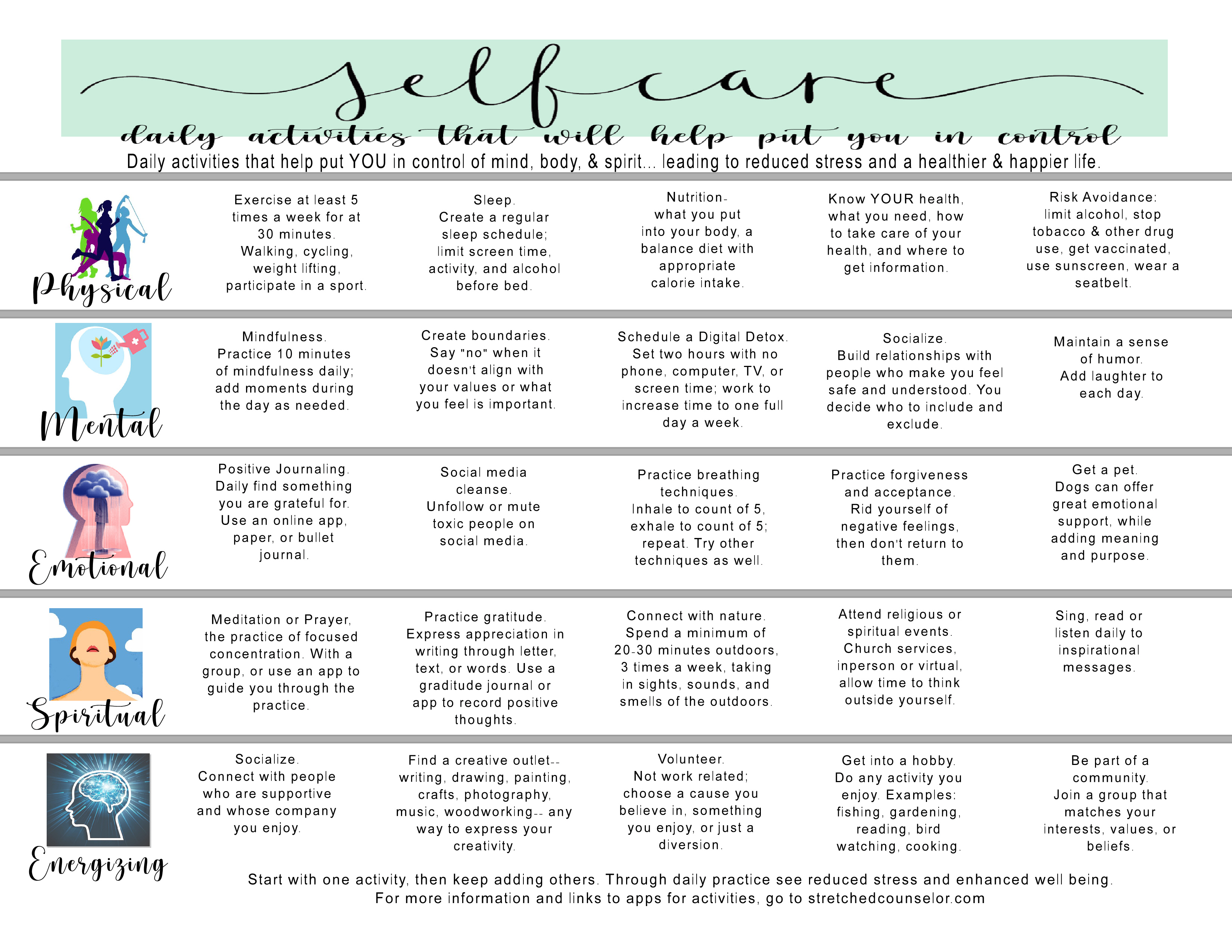
The "what," are daily practices and activities. And "you deliberately do," means you are taking control. Gaining Control The underlying force of selfcare is gaining and maintaining personal control-- control of your health, your thoughts and emotions, your time and energy. When we lose control, or even feel the loss of control, we compromise our physical and mental health, as well as ability to have a long, happy, and fulfilled life. Deliberate The process for gaining control is deliberate-- consistently and intentionally nurturing your whole self, mind, body, and spirit. It's setting a plan and consistently working on it until those practices become routine. Self care practices Selfcare practices can be divided into five categories: physical, mental, emotional, spiritual, and energizing. All categories are important, they interconnect to work toward a healthier you. Physical activity will increase emotional stability. Nutrition is connected to physical and mental health... social interactions have been linked to better sleep... a sense of purpose gives energy to keep moving forward... all connect to nurture the whole self. Not one size fits all Choosing practices that fit you is key to success. Maybe you struggle with mindfulness but have no problem with a digital detox. Journaling may be stressful if you don't function in words, but just walking in nature may settle your thoughts. You decide what will work best for you. The payoff? Reduced stress, and a healthier and happier life. What more need be said! Click here for more information on making selfcare work for you. |
Selfcare PracticesActivities and practices give you energy, lower your stress, and contribute to your overall wellbeing, making you stronger, healthier, and happier. A balance plan includes activities in each of the five areas. Click any to learn more.





|
|
There are times when selfcare isn't enough in helping you feel well. We might take care of a cold with selfcare-- rest, liquids, cold medicine, but you'd likely see a professional if you broke your arm. Mental health is health. Mindfulness and exercise help in relieving stress, but professional help may be needed for depression. Click here for information on a range of help options. |
The goal of a long, happy life is through consciously nurturing your whole self.